Physiotherapy Education

Master Advanced Posture Assessment & Corrective Exercise

Finally! A step by step course that teaches you posture assessment, imbalance identification and corrective exercise application.

4.9 / 5Learner Rating
50+
Physios TrainedAnd Counting

A short walkthrough of the postural assessment process — from observation to correction.
0Modules
0Practical Focus
What You'll Learn

Assessment first. Correction second. Every time.

Faulty movement doesn't start at the joint that hurts — it starts upstream. Our curriculum trains you to find it, name it, and correct it.
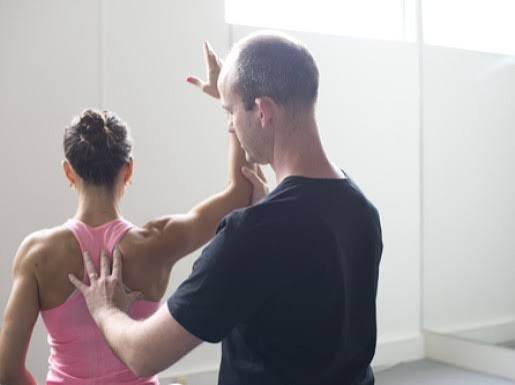
Part 01 Live demonstration comparing faulty lateral posture against corrected alignment

Postural Assessment

Posterior, anterior and lateral view analysis using plumb lines, anatomical landmarks and structured observation.
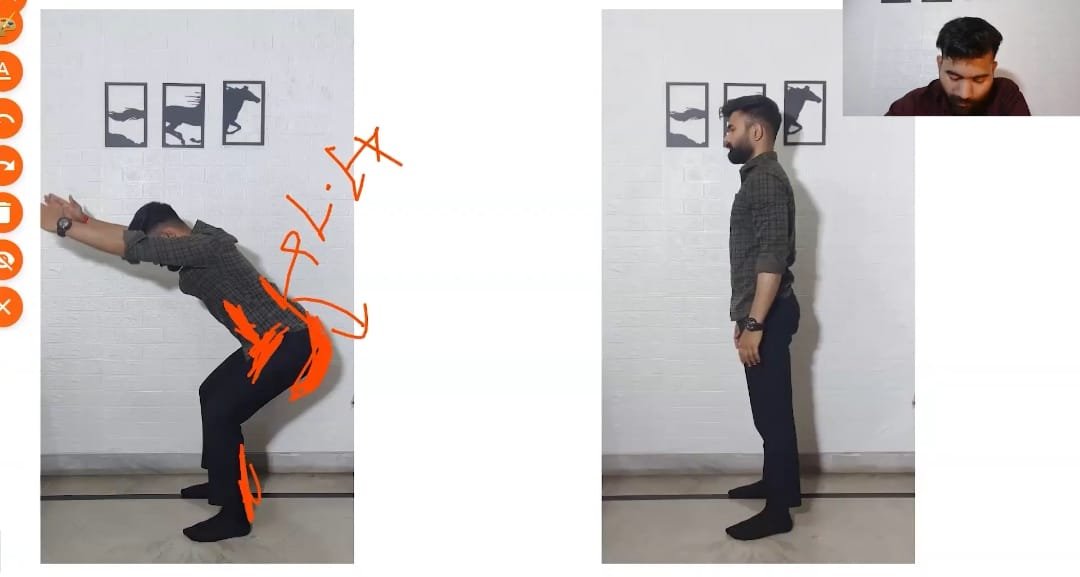
Part 02 Vishal Panchal demonstrating a functional movement test

Functional Testing

Single leg stability, scapular dyskinesia, thoracic rotation and dorsiflexion tests that reveal compensation.
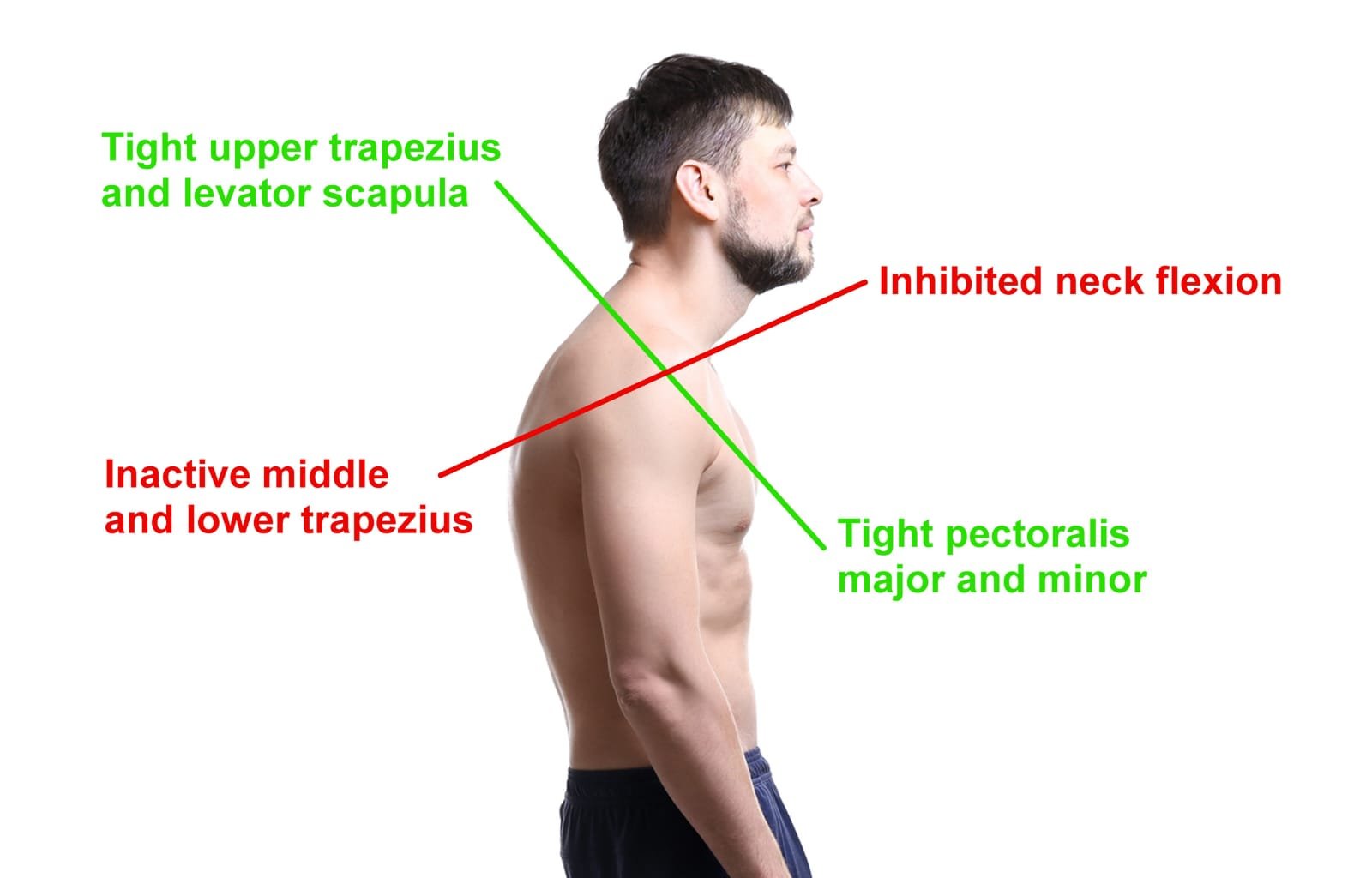
Part 03 Upper cross syndrome posture diagram with tight and inactive muscle labels

Syndrome Recognition

Upper Cross, Lower Cross, Layered, Pronation Distortion, Flat Back and Sway Back patterns, explained clinically.
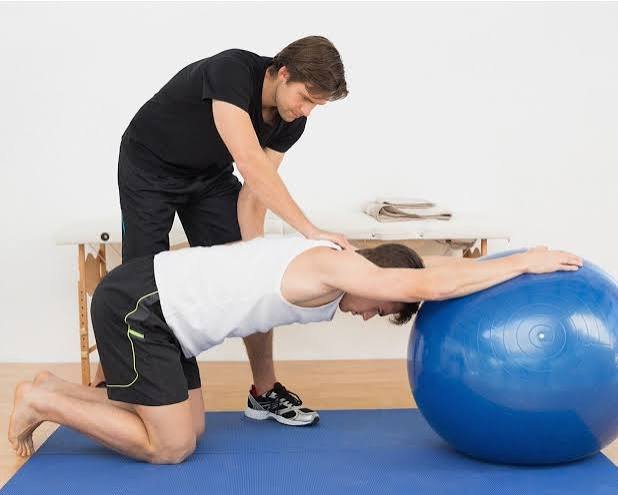
Part 04 Vishal Panchal coaching a corrective exercise progression

Corrective Exercise

The 4-phase model — mobility, stability, strength, functional integration — with exact set and rep prescriptions.

Why This Course

Built on clinical reasoning, not checklists

Structured Assessment Framework — not just random posture checklists.

Clinical Reasoning Approach — learn why to choose an exercise, not just which one.

Static + Dynamic Assessment — understand movement from multiple perspectives.

100+ Corrective Exercises — organized according to assessment findings.

Step-by-Step Learning — from assessment to exercise prescription in one workflow.

Real Clinical Demonstrations — learn practical application, not just theory.

10+ Hours of Premium Content — learn at your own pace with lifetime access.

Certificate of Completion — showcase your learning after finishing the course.

Why Learn From Movement Mastery

Three principles behind every module

01

Observation before opinion

Every module starts with structured observation — landmarks, planes and views — before any conclusion is drawn.

02

Mechanism over memorization

You don't just learn what Upper Cross Syndrome looks like — you learn the muscle imbalance mechanism that causes it.

03

Correction with dosage

Corrective exercise is taught with real prescription — sets, reps, hold times and load — not vague advice.

Who Can Join

Built for anyone who assesses movement for a living

No prior experience required. Whether you're a student or a practicing professional, this course helps you build a structured assessment and corrective exercise framework.

Physiotherapists (BPT / MPT)

Physiotherapy Interns

BPT Students

MPT Students

Fitness Trainers & Personal Trainers

Strength & Conditioning Coaches

Rehab Professionals

Sports Rehabilitation Professionals

Inside the Course

Practical demonstrations you can follow step by step

See assessment positions, resistance-band progressions, corrective drills, and hands-on techniques demonstrated clearly.
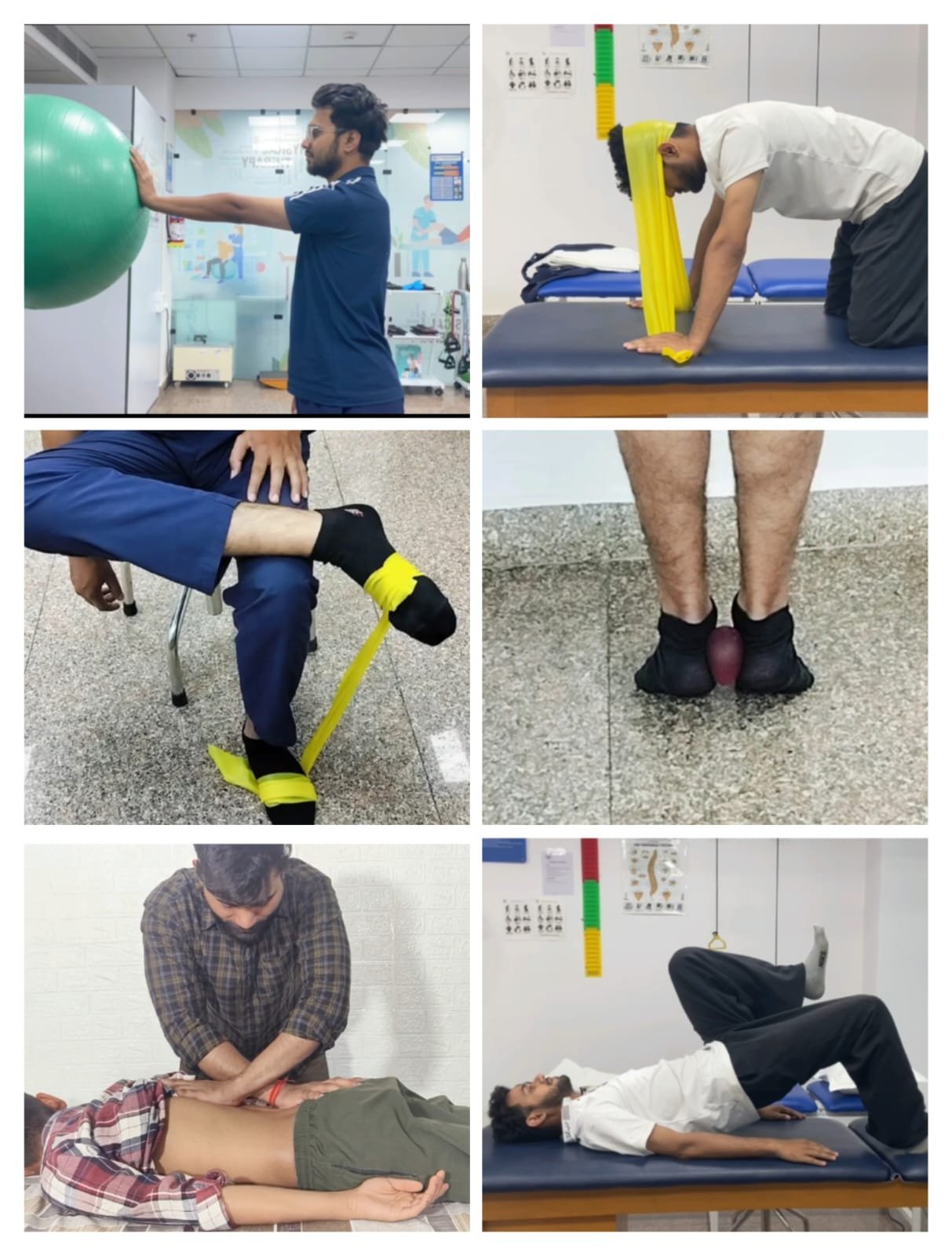
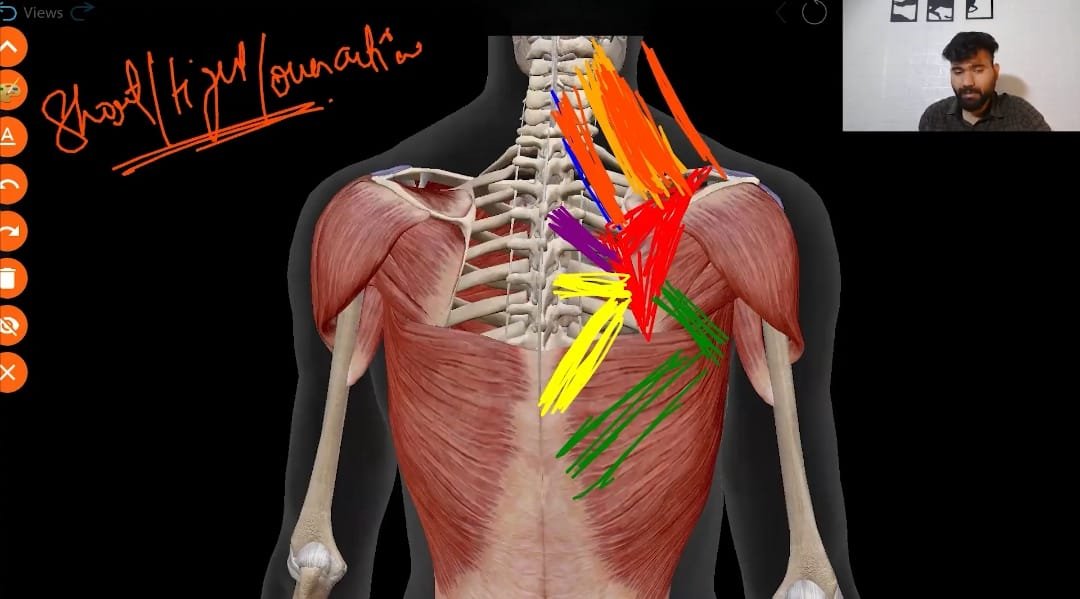
Practical posture assessment and corrective exercise demonstrations

Real clinical demonstrations, not slideshow theory

Every concept is shown live — on a body, on a 3D anatomy model — so you see exactly what you're being asked to identify.
How The Course Flows

One continuous line, from observation to correction

1

Understand posture & posture control

Definitions, Janda's Muscle Imbalance Theory, postural muscle characteristics and the equipment every assessment needs.

2

Assess from every view

Posterior, anterior and lateral analysis — head to foot — with the muscle-length tables behind each deviation.

3

Test movement, not just alignment

Functional tests that expose stability, mobility and compensation the static assessment alone can't show.

4

Prescribe the correction

Match each syndrome — UCS, LCS, PDS and more — to a 4-phase corrective exercise plan with clear dosage.

Course Highlights

Everything you need to learn, revise, and apply

10+ Hours of ContentPremium video learning
Lifetime AccessLearn and revisit anytime
Certificate IncludedCompletion proof for your profile
Downloadable NotesStructured revision material
Practical FocusedReal assessment and correction workflow
13MODULES
142TOPICS COVERED
Course Curriculum

Modules 1 – 13

01
Module 1

Posture Introduction

18 topics covered
  • Definition of Posture
  • Good Posture vs Faulty Posture
  • Disadvantages of upright posture
  • Posture Control – definition
  • Components: Sensory System, CNS, Musculoskeletal System
  • Types: Static vs Dynamic Posture
  • Developmental curves (primary – thoracic/sacral, secondary – cervical/lumbar)
  • Why do postural assessment? (information, baseline, holistic treatment, save time)
  • Case examples (back pain, runner's knee, frozen shoulder)
  • Who should NOT have postural assessment? (anxious, unable to stand, unstable, no consent)
  • Postural muscles characteristics (Type I fibers, anti-gravity, fatigue-resistant)
  • Janda's Muscle Imbalance Theory
  • Short/tight muscle → weak (mechanism)
  • Weak muscle → tight (mechanism)
  • Chronically lengthened muscle → feels tight
  • Equipment required (room, mirror, body crayons, chart, model)
  • Anatomical landmarks (scapula, PSIS, spinous processes, olecranon, knee creases, calf midline, Achilles)
  • COM, BOS, Plumb line definitions
02
Module 2

Posterior View

29 topics covered
  • Posterior view standard alignment
  • Head position – torticollis (wry neck), lateral flexion, rotation
  • Shoulder height asymmetry
  • Scapular adduction & abduction
  • How to palpate medial border of scapula
  • Inferior angle of scapula
  • Scapular rotation (upward/downward)
  • Table: Muscle length changes based on scapular position
  • Thoracic spine alignment (straight vs deviated – fingernail trick)
  • Trunk rotation (right vs left)
  • Table: Muscle length corresponding to trunk rotation
  • Skin creases asymmetry
  • Thoracic arm distance
  • Elbow position (olecranon process comparison)
  • Hand position
  • Lumbar spine observation
  • Pelvis – lateral tilt
  • Table: Effects of laterally tilted pelvis (lumbar spine, muscles, hip)
  • PSIS symmetry
  • Pelvic rotation
  • Buttock crease symmetry
  • Leg length difference (femur vs tibia)
  • Knee – Genu Varum & Genu Valgum
  • Posterior knee observation
  • Calf bulk symmetry
  • Achilles tendon alignment
  • Foot position – Pes Valgus (pronated) vs Pes Varus (supinated)
  • Table: Changes with Pes Valgus and Pes Varus (malleoli position, muscles, weight bearing)
  • Other observations (scars, blemishes, taping)
03
Module 3

Anterior View

23 topics covered
  • Face symmetry
  • Head position (rotation, tilt)
  • Muscle tone observation
  • Clavicles (level, symmetry)
  • Shoulder level
  • Rounded shoulders (protraction)
  • Trunk alignment
  • Carrying angle (elbow)
  • Arm position (internal/external rotation)
  • Hand and wrist position
  • Abdomen (protrusion, shape)
  • Pelvis (ASIS level, rotation)
  • Table: Pelvic rotation and its effect on foot (supination/pronation)
  • Muscle bulk symmetry
  • Knee alignment (Genu Valgum/Varum from anterior)
  • Table: Changes to knee joint with Genu Valgum and Varum (lengthened/shortened muscles)
  • Patellar position
  • Tibia position (internal/external rotation)
  • Craig's Test concept
  • Q Angle
  • Ankle alignment
  • Foot position (Pes Cavus & Pes Planus)
  • Other observations
04
Module 4

Lateral View

12 topics covered
  • Lateral view standard alignment (plumb line – ear, shoulder, hip, knee, ankle)
  • Head position (forward head)
  • Cervical spine alignment
  • Cervicothoracic junction
  • Thoracic kyphosis
  • Abdomen observation
  • Lumbar lordosis (increased vs decreased)
  • Pelvis tilt – Anterior vs Posterior
  • Table: Anterior vs Posterior pelvic tilt (ASIS position, lumbar spine, shortened/lengthened muscles)
  • Sway back posture
  • Ankle alignment
  • Other observations (edema, toe deformities)
05
Module 5

Practical

10 topics covered
  • Practical application of posture assessment
  • How to set up the patient (clothing, standing position)
  • How to use plumb line
  • How to mark anatomical landmarks
  • Photography guidelines (posterior, lateral, anterior views)
  • Observation checklist for each view
  • Documentation format
  • Tips for palpation (scapula, PSIS, ASIS, spinous processes)
  • Common mistakes to avoid
  • Practical case examples
06
Module 6

Functional Assessment

7 topics covered
  • What is Functional Assessment?
  • What it gives you: movement quality, compensation, stability vs mobility, pain reproduction
  • Single Leg Stability / Pelvic Control Test
  • Scapular Dyskinesia Test:
  • Seated Thoracic Rotation Test:
  • Weighted Lunge Test for Dorsiflexion
  • General contraindications for functional testing
07
Module 7

Corrective Exercise Intro

13 topics covered
  • What is Corrective Exercise? (fix posture and movement problems, based on assessment)
  • Why use it? (muscle imbalance, poor posture, faulty movement, pain, injury risk)
  • 4 Phase Corrective Model:
  • Phase 1: Mobility/Flexibility (release tight muscles, improve ROM)
  • Phase 2: Stability (activate weak muscles, hold position)
  • Phase 3: Strength (build muscle strength with resistance)
  • Phase 4: Functional Integration (apply correction in real movement)
  • Important Rule: Mobility first, then stability. Stability must include endurance. Strength without control is useless.
  • Two Line Concept: Assessment tells problem, corrective exercise gives solution
  • Exercise Prescription guidelines:
  • Mobility: 1-2 sets, 8-12 reps or 20-30 sec hold, very low load
  • Stability: 1-3 sets, 12-20 reps or 20-60 sec hold, low load
  • Strength: 2-4 sets, 4-8 reps, moderate to high load, rest 60-90 sec
08
Module 8

UCS (Upper Cross Syndrome)

5 topics covered
  • Introduction
  • Muscle Imbalance
  • MMT
  • Muscle Length Testing
  • Treatment
09
Module 9

LCS (Lower Cross Syndrome)

5 topics covered
  • Introduction
  • Muscle Imbalance
  • MMT
  • Muscle Length Testing
  • Treatment
10
Module 10

Layered Syndrome (Double Cross Syndrome)

5 topics covered
  • Introduction
  • Muscle Imbalance
  • MMT
  • Muscle Length Testing
  • Treatment
11
Module 11

PDS (Pronation Distortion Syndrome)

5 topics covered
  • Introduction
  • Muscle Imbalance
  • MMT
  • Muscle Length Testing
  • Treatment
12
Module 12

Flat Back Posture

5 topics covered
  • Introduction
  • Muscle Imbalance
  • MMT
  • Muscle Length Testing
  • Treatment
13
Module 13

Sway Back Posture

5 topics covered
  • Introduction
  • Muscle Imbalance
  • MMT
  • Muscle Length Testing
  • Treatment
Pricing & Enrollment

One-time investment. Lifetime access.

Limited-Time Price
₹9,999 ₹4,999/ full course
You save ₹5,000 — 50% off the regular price
  • 13 modules · 10+ hours of premium content
  • 100+ corrective exercises, organized by finding
  • Lifetime access — learn at your own pace
  • Certificate of Completion
Vishal Panchal, physiotherapist and founder of Movement Mastery

Vishal Panchal

Physiotherapist | Founder, Movement Mastery

CMOT | Dip.ASTR | CES | 3DMAPS | Chain Reaction | Cert.Spine & Nerve Mobilization

Through Movement Mastery, he has trained healthcare and fitness professionals via online workshops and educational programs, with an emphasis on hands-on learning, clinical application, and structured assessment frameworks.

Feedback From Learners

Trusted by physiotherapists and educators

4.9★★★★★
Frequently Asked Questions
Who can join this course?

This course is designed for Physiotherapists, Physiotherapy Students, Interns, and Fitness Trainers.

Is this course beginner-friendly?

Yes. The course starts from the fundamentals and progresses to advanced assessment and corrective exercise strategies.

Will I receive a certificate?

Yes. You'll receive a Certificate of Completion after successfully completing the course.

Is this course recorded or live?

This is a fully recorded course, so you can learn at your own pace.

How long will I have access?

You'll get lifetime access to all course content and future updates.

Will I get notes and study materials?

Yes. Comprehensive PDF notes and supporting resources are included.

Are practical demonstrations included?

Yes. The course includes real clinical demonstrations, assessment techniques, and corrective exercise progressions.

Can I watch the course on my mobile phone?

Yes. The course can be accessed on mobile, tablet, laptop, or desktop.

How do I enroll?

Click the Enroll Now button and complete the payment process to get instant access to the course.

Get In Touch

Reach the Movement Mastery team

Ph

Phone / WhatsApp

+91 80777 44123
Loc

Based In

India

Thanks — your message has been noted. This is a front-end demo form, so connect it to your email/CRM to receive real submissions.

This form is front-end only for now — connect it to your preferred backend to receive messages.

Master Posture Assessment & Corrective Exercise in just ₹4,999